
Loading...
Serving Queensbury, NY and surrounding areas. (518) 645-9154
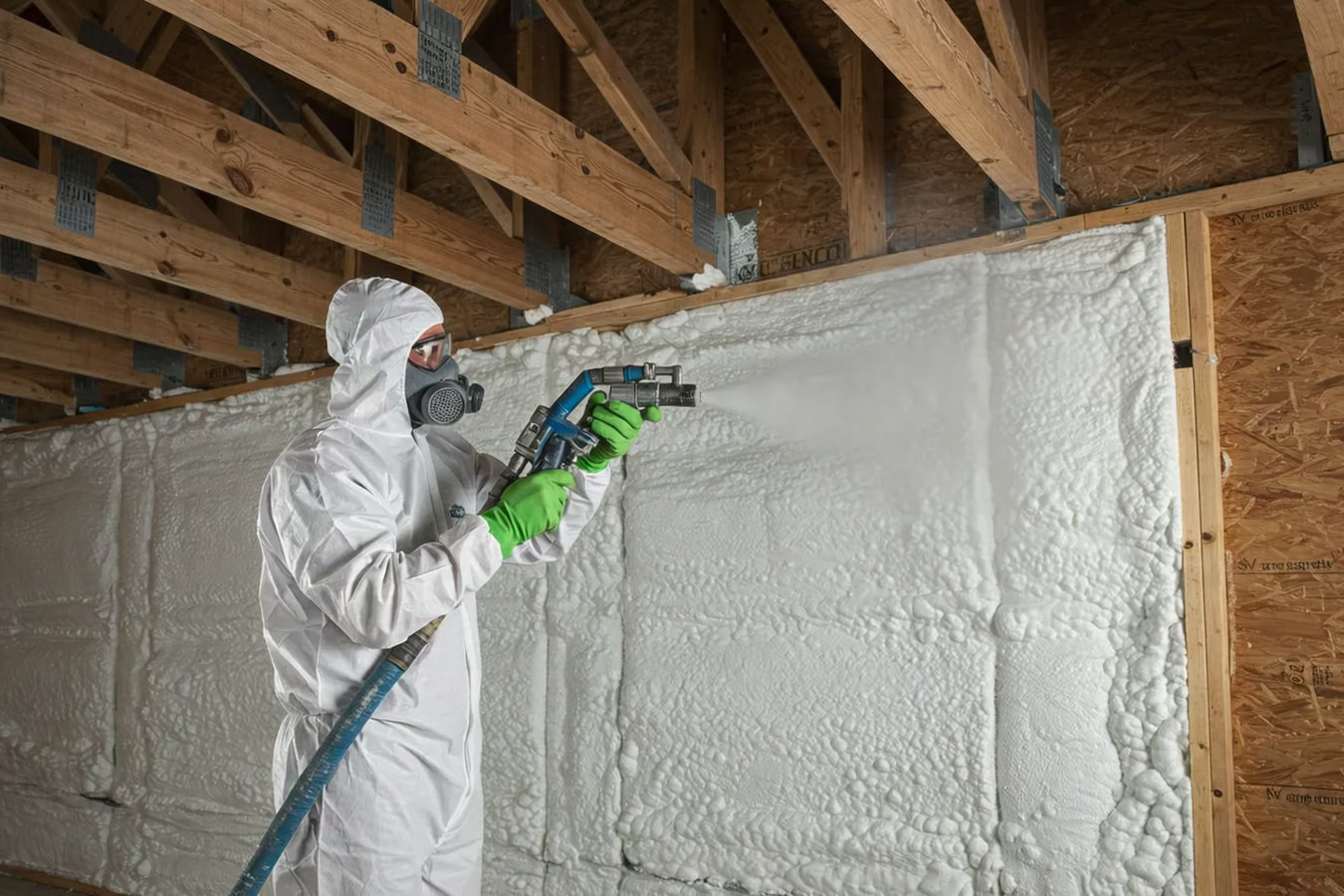
If your heating bills keep climbing and your house never quite feels warm, air is escaping through gaps that standard insulation leaves behind. Spray foam seals and insulates in one step - no more cold rooms, no more ice dams, no more wasted money.
Spray foam insulation in Queensbury, NY expands on contact to fill gaps completely, sealing air leaks and insulating at the same time - most attic and crawl space jobs are completed in a single day.
Unlike fiberglass batts that leave air pathways around them, spray foam bonds directly to the surface and stays there for the life of the building. That matters in Queensbury, where January temperatures regularly drop below zero and any gap in your thermal envelope shows up immediately on your heating bill. If you are also considering attic insulation as part of a broader upgrade, spray foam and blown-in work well together in different parts of the same home.
A large share of homes in Queensbury were built between the 1950s and 1980s, when insulation requirements were far less demanding than they are today. Rim joists, crawl spaces, and knee walls in those homes are often completely uninsulated - and spray foam is one of the most cost-effective ways to address them.
If your gas or electric bill has crept up year over year without any obvious reason, heat is escaping somewhere. In Queensbury winters, a poorly sealed attic or crawl space is often the culprit, and it shows up on every January and February bill. Spray foam closes those pathways for good.
Thick ridges of ice along the edge of your roof after a snowfall mean heat is escaping through your attic and melting snow above it. The meltwater refreezes at the cold eaves and can work its way under your shingles. This is one of the most common and costly problems for Queensbury homeowners, and it almost always points to an insulation gap.
If one bedroom or a room above the garage never reaches a comfortable temperature, the space around it - the attic, crawl space, or exterior walls - is letting cold in. This is especially common in older Queensbury homes where insulation was added piecemeal and some areas were simply missed.
Hold your hand near an electrical outlet on an exterior wall on a cold day. If you feel cold air, that wall cavity connects to the outside. The same test works along baseboards and around window frames. These drafts mean your home's envelope has gaps that adding insulation alone will not fix without also sealing the air leaks.
We install both types of spray foam depending on where it is going and what the space demands. Closed-cell foam insulation is denser, acts as a moisture barrier, and is the right choice for crawl spaces, basement rim joists, and any area that sees dampness or extreme cold. It delivers roughly twice the thermal resistance per inch compared to standard fiberglass, which matters a lot in a Queensbury winter. Open-cell foam is softer and less expensive per square foot - it works well in attics and interior walls where moisture is not a concern and sound control is a priority.
Many Queensbury homes need both types in different locations. A good contractor will assess your specific home and recommend the right product for each area rather than defaulting to one type everywhere. We also combine spray foam with other upgrades - if your project calls for attic insulation using blown-in material on the attic floor and spray foam on the roof deck, we handle both in the same visit.
Best for crawl spaces, rim joists, basement walls, and exterior applications where moisture control and maximum thermal resistance per inch are the priority.
A cost-effective option for attics and interior walls where the focus is thermal performance and noise reduction in areas without significant moisture exposure.
Applied to the underside of the roof deck to create a conditioned attic space, eliminating ice dam conditions and bringing ductwork inside the thermal envelope.
Seals the most common cold-air entry points in older Queensbury homes, reducing floor cold, pipe freeze risk, and moisture intrusion from below.
Queensbury sits at the southern edge of the Adirondacks, and the area regularly sees temperatures well below zero in January and February, with average annual snowfall exceeding 60 inches. That level of cold means your home's insulation has to work harder than it would in a milder climate - and gaps or thin spots that might go unnoticed elsewhere will show up immediately on your heating bill here. New York State follows an energy conservation code that requires higher insulation levels than most of the country for this climate zone, and a contractor familiar with those requirements will make sure the work is documented correctly so you can access available NYSERDA rebates.
A large share of homes in Queensbury and nearby Glens Falls were built in the 1950s through 1980s, when insulation requirements were far less demanding. Rim joists, crawl spaces, and knee walls in those homes are often completely uninsulated. Ice dams are a real and recurring problem in this area - the freeze-thaw cycles every winter force water under shingles and into ceilings. Spray foam applied to the underside of the roof deck is one of the most effective permanent solutions because it stops the heat from escaping rather than managing the damage after the fact.
We ask a few basic questions - what areas you are concerned about, how old the house is, and what you have noticed. No expertise required on your end. We respond within 1 business day and schedule a visit at your convenience.
We walk through the areas you want insulated, take measurements, and identify any problem spots. At the end of the visit you receive a written estimate breaking down exactly what will be done, where, and at what cost - no surprises, no pressure to sign on the spot.
The crew arrives with all equipment, masks off surfaces, and begins spraying. The foam expands and hardens within seconds. Most attic and crawl space jobs are finished in a single day. You and your family will need to stay out for two to four hours while the foam cures and the space ventilates.
Once cured, we walk through the finished work with you - showing coverage, pointing out what was done, and answering any questions before the crew packs up. We provide the documentation you need to file any NYSERDA rebate claims.
Free estimate, no obligation. We respond within 1 business day.
(518) 645-9154Spray foam requires manufacturer-specific training and specialized equipment - it is not a job where general insulation experience is enough. Our installers are trained on the systems we use, which means proper mix ratios, correct application thickness, and coverage that holds up over time.
We are based in Queensbury and work throughout Warren County year-round. We know the housing stock here - the ranch homes and split-levels built in the 60s and 70s, the rim joist conditions in older basements, and what Queensbury winters actually demand from an insulation system. That local knowledge changes how we approach each job.
New York homeowners can qualify for meaningful rebates through NYSERDA for spray foam projects, but the work has to be documented correctly for the claim to go through. We structure the job so it qualifies and provide the paperwork you need to file - so the rebate actually comes back to you.
New York State requires higher insulation levels for this climate zone than most of the country. A contractor who does not know the local requirements may under-insulate your home even on a fresh job. We know what the code requires and make sure the work meets it. For projects that require a permit through the Town of Queensbury Building and Codes office, we handle that process for you.
Spray foam is a long-term investment - when it is done right, you will not need to redo it. Every job we do comes with a walkthrough so you can see exactly what was installed before we leave. Our goal is a home that stays warm through every Queensbury winter, not just the first one.
Blown-in and batt attic insulation to reduce heat loss through the ceiling and eliminate the conditions that cause ice dams.
Learn MoreHigh-density closed-cell foam for crawl spaces, rim joists, and any area where moisture control is as important as thermal performance.
Learn MoreQueensbury winters do not wait - the sooner your home is sealed, the sooner you stop paying to heat the outside.