Loading...
Serving Queensbury, NY and surrounding areas. (518) 645-9154
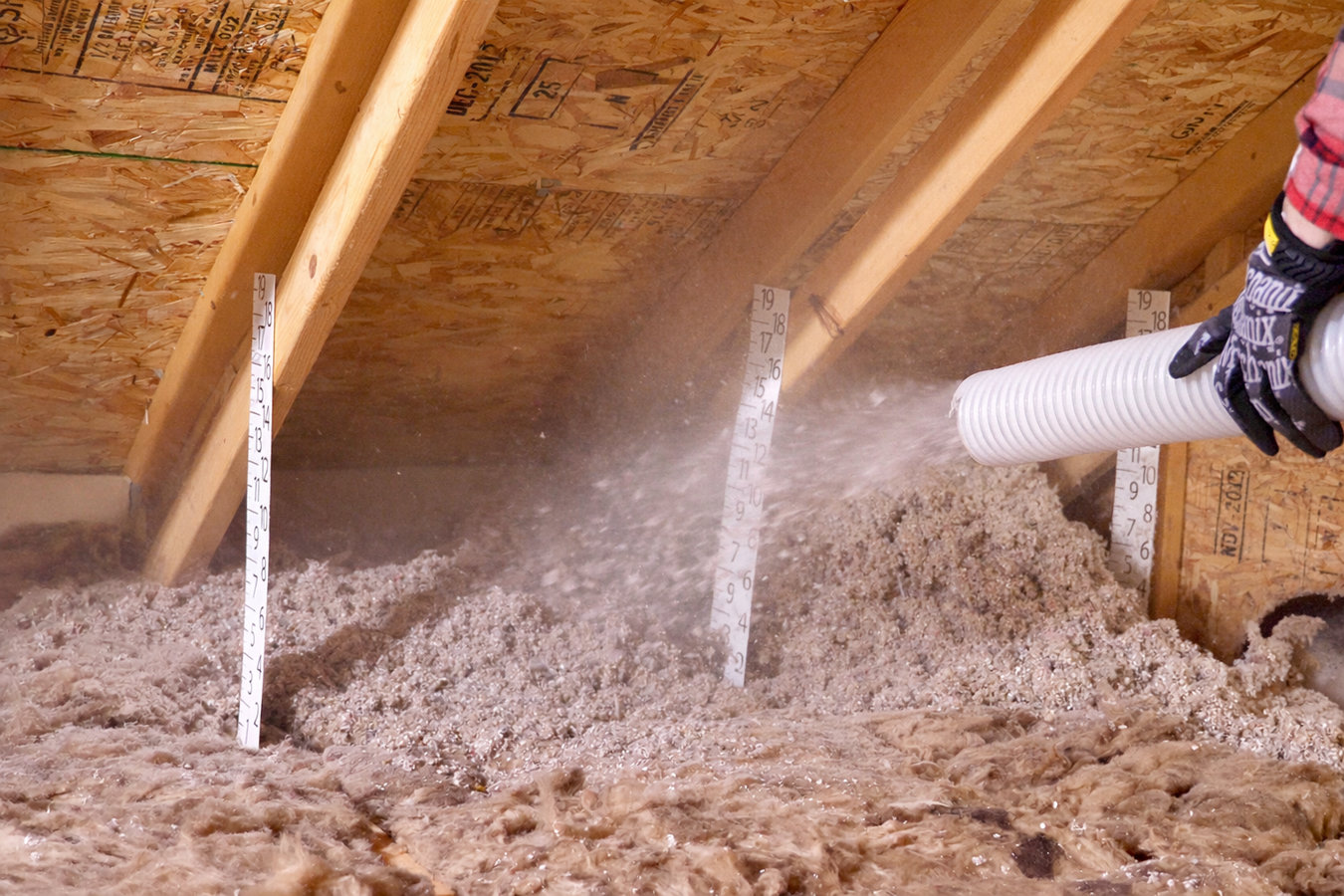
Batts leave gaps in corners and around framing. Blown-in insulation conforms to every space in your attic, stops heat loss, and ends the ice dams that come with Queensbury winters.
Blown-in insulation in Queensbury, NY is loose cellulose or fiberglass material blown into your attic through a large hose, filling gaps and irregular spaces completely - most standard attic jobs are finished in a single day with no need to leave your home.
Unlike rigid batts that stop where the framing stops, blown-in material settles into corners, around obstructions, and over existing insulation, giving you the uniform coverage your attic needs to keep Queensbury winters from draining your heating budget. If you are weighing your options, many homeowners also look at whole-home insulation to address the attic and other areas together in a single project.
A large share of homes in Queensbury were built between the 1950s and 1980s with insulation levels that fall well short of what the Department of Energy now recommends for this climate zone. If your home is in that range and the attic has never been touched, you are almost certainly losing heat through the ceiling every winter.
If your gas or electric bills are higher than you can explain, heat loss through the attic is one of the most common causes. Queensbury's heating season runs from October through April, and even moderate heat loss through a thin attic adds up to hundreds of dollars by spring. If your furnace is working fine but bills are still high, the ceiling is the next place to look.
Ice dams - the thick ridges of ice that build up at the edge of your roof - are a direct sign that heat is escaping through your attic. Queensbury gets significant snowfall and frequent freeze-thaw cycles in winter, which makes ice dams a common and costly problem here. If you have seen them forming or noticed water stains on your ceiling near exterior walls, your attic insulation is almost certainly part of the problem.
Upstairs bedrooms or rooms directly under the roof that never get warm in January - regardless of how high you set the heat - are a reliable sign the ceiling above them is not doing its job. Cape cod-style homes and older ranch houses, both common in Queensbury, are especially prone to this because of how their attic spaces are shaped. The difference you feel is heat moving through a surface that should be stopping it.
If you peek into your attic and can clearly see the wooden beams running across the floor, your insulation is almost certainly below the level recommended for this climate. In Queensbury, you want insulation deep enough that those joists are completely buried. If they are visible, you are losing a significant amount of heat every winter regardless of how well the rest of your home is sealed.
We install both cellulose and fiberglass blown-in insulation depending on your attic conditions and your goals. Cellulose is made from recycled paper treated to resist fire and pests, and it settles densely into tight spaces - it is a strong choice for homes where filling irregular gaps is the priority. Fiberglass is lighter and resists moisture more readily, making it well-suited for attics in homes where condensation has been a concern. Either way, we seal air gaps around light fixtures, plumbing penetrations, and the attic hatch before any insulation goes in - because sealing those gaps is what actually stops air movement, while the insulation handles heat transfer.
For homeowners who want to address more than just the attic, we also offer full attic insulation packages that combine air sealing, blown-in material, and a post-installation depth check so you can verify the coverage yourself. If your project also involves other parts of the house, a whole-home insulation assessment lets us look at the attic, walls, and crawl space together and prioritize where your money will do the most good.
Best for attics with irregular framing or existing insulation, where dense packing and gap-filling performance are the priority.
A strong option for attics where moisture resistance matters and a lighter, non-settling material is preferred.
Combines air sealing of penetrations and bypasses with blown-in coverage for homeowners who want the most complete thermal improvement in one visit.
Adds material over existing insulation to bring older Queensbury homes up to current depth recommendations without a full tear-out.
Queensbury sits in the Adirondack foothills in Warren County, where average January lows regularly drop into the single digits and the heating season stretches from October through April. The Department of Energy places this region in Climate Zone 6, which calls for attic insulation levels significantly higher than what most homes built before the 1990s actually have. Many of the ranch-style and cape cod homes in Queensbury neighborhoods - built during the mid-20th century construction boom - were insulated to the standard of the time, which is now known to be inadequate for this climate. Ice dams, which form when heat escaping through an under-insulated attic melts rooftop snow that refreezes at the cold eaves, are a recurring and costly problem for homeowners across Queensbury and the surrounding area because of the region's heavy snowfall and frequent freeze-thaw cycles.
We work regularly in communities throughout Warren County, including Glens Falls and South Glens Falls, and we understand what the local housing stock and climate demand from an insulation installation. NYSEG customers in Queensbury may also qualify for rebates and financing through New York State energy efficiency programs, which can meaningfully reduce the out-of-pocket cost of an attic upgrade.
We will ask you a few basic questions about your home's age and what you have noticed - high bills, cold rooms, ice dams. We respond within one business day and come prepared for your specific situation.
We measure your current insulation depth, check for air gaps that need sealing first, and look for any moisture or ventilation concerns. The visit takes 30 to 60 minutes and we will explain what we found before we leave.
The crew seals air gaps first, then places depth markers throughout the attic, then blows insulation to the target depth. The blowing process typically takes one to three hours for a standard attic - no demolition, no strong odors, no curing time.
After the blowing is done, we invite you to check the depth markers yourself. We provide documentation of the materials and coverage achieved - which you will need to claim the federal tax credit - and walk you through the finished work.
Free estimate. No pressure. We will measure what you have and show you exactly what is needed - including every rebate and credit available to Queensbury homeowners.
(518) 645-9154Air sealing before blowing insulation is the step many contractors skip - and skipping it is why homeowners do not see the energy savings they expected. We seal gaps around light fixtures, plumbing penetrations, and the attic hatch on every job before a single pound of insulation goes in.
We place depth markers throughout your attic before the blowing starts so you can verify the coverage yourself when the work is done. You do not have to take our word for it - the markers let you see that the insulation is as deep as we said it would be. Building Performance Institute standards guide how we document and verify coverage.
We work throughout Queensbury and the surrounding towns regularly and know the attic configurations common in this area's ranch homes, cape cods, and split-levels. That familiarity means fewer surprises on installation day and a faster, cleaner job.
We know the NYSEG and NYSERDA programs that apply in Queensbury and will explain what you qualify for before you commit to anything. We also provide the documentation you need to claim the federal energy efficiency tax credit - so that money does not get left on the table.
Every one of these practices is standard on our jobs - not an add-on, not something you have to ask for. When you call Queensbury Insulation, you get an installation that is verifiable, documented, and done to the depth this climate actually demands.
Address your attic, walls, and crawl space together with a whole-home insulation plan tailored to your house.
Learn MoreA focused attic upgrade combining air sealing and insulation to eliminate ice dams and reduce heating costs.
Learn MoreHeating season in Warren County starts early - schedule your assessment now and get ahead of the cold before the calendar fills up.