
Loading...
Serving Queensbury, NY and surrounding areas. (518) 645-9154
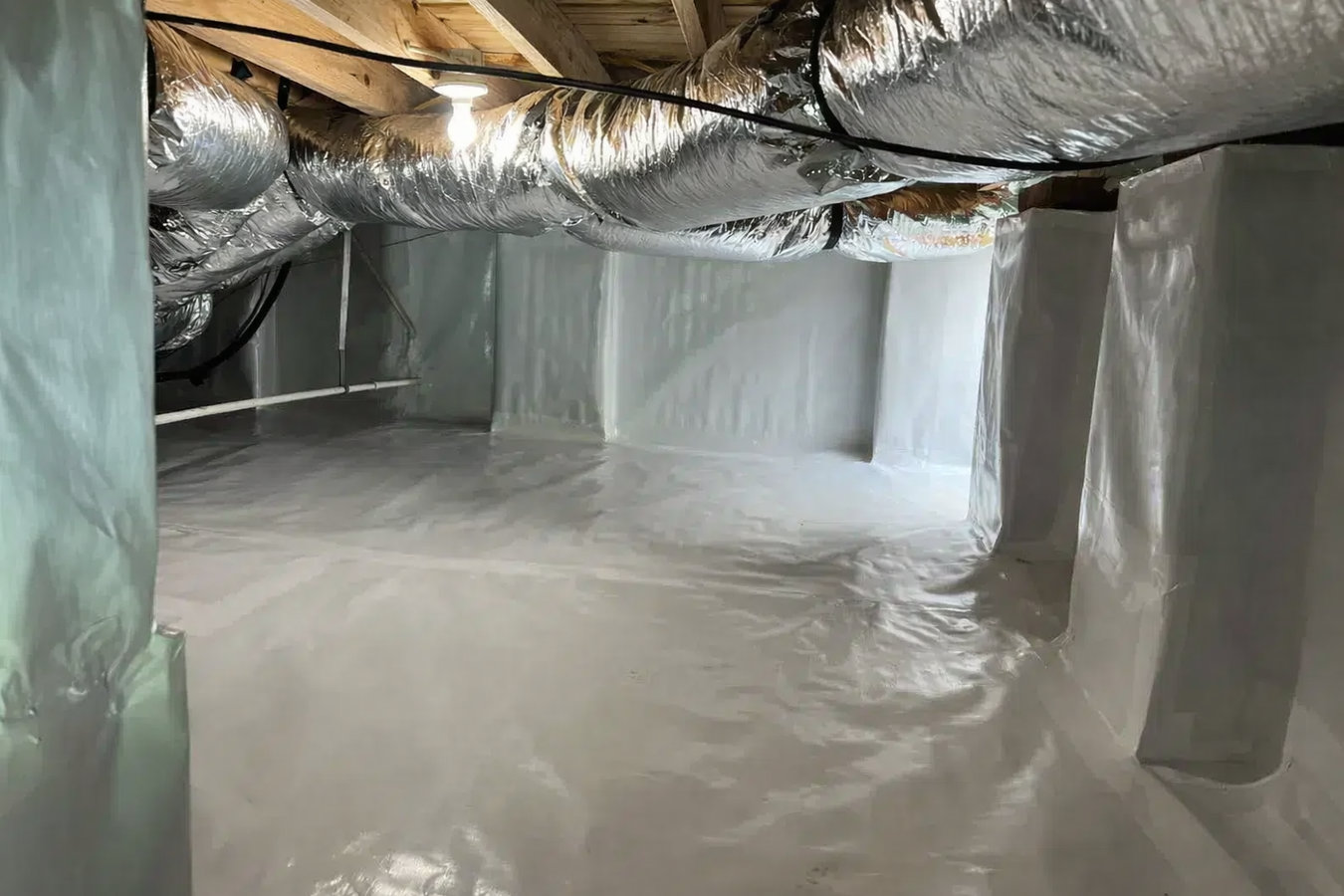
Ground moisture rising through your crawl space damages floor joists, ruins insulation, and fills your home with musty air. We install heavy-duty vapor barriers that seal the problem at its source.
A crawl space vapor barrier in Queensbury, NY is a thick plastic liner installed across the crawl space floor to block soil moisture from rising into your home - most residential jobs take one to two days and require no disruption to your living areas.
Without a barrier, moisture from the soil pushes upward season after season. In Queensbury, the combination of heavy snowmelt in spring and humid summers near Lake George creates a moisture load that unprotected crawl spaces simply cannot handle. That moisture soaks into floor joists, degrades insulation, and eventually creates the musty odor that many homeowners mistake for a general dampness problem. If your crawl space also lacks thermal protection, pairing the vapor barrier with crawl space insulation addresses both problems in a single project.
A significant share of homes in Queensbury were built before vapor barriers were standard practice. If your home was constructed before 1990 and you have never had the crawl space inspected, there is a real chance the only thing between your floor joists and bare soil is open air. That is a straightforward problem with a clear solution - and getting proper vapor barrier installation done early costs far less than addressing the wood rot or mold damage that moisture eventually causes.
A musty or earthy odor that appears in late March or April - right after Queensbury snowmelt - is one of the clearest signs of crawl space moisture. That smell is mold or mildew beginning to grow in a damp space, and because air moves upward through floors, you will notice it in your living room before you ever look underneath. Waiting means the mold has more time to establish.
Floors that feel noticeably cold in a well-heated home, or spots that feel slightly spongy when you walk on them, can both trace back to moisture damage below. When wood absorbs moisture over time it softens and loses structural integrity - what starts as a cold floor can progress to soft spots that signal more serious subfloor or joist damage underneath.
Water droplets forming on pipes, ductwork, or floor joists in the crawl space mean humidity down there is high enough to cause condensation. This is a common pattern in homes near the Hudson River corridor, where warm summer air meets cooler surfaces in an unventilated space. That moisture does not stay on the pipes - it spreads to the wood around them.
A damp crawl space degrades the insulation above it. When insulation absorbs moisture it loses its ability to hold heat, which means your furnace works harder and your bills go up. If your heating costs have risen over the past few winters without a clear reason, crawl space moisture is worth investigating - especially in a Queensbury home that heats with propane or fuel oil.
We install crawl space vapor barriers using heavy-duty polyethylene liners - at minimum 10-mil material for most Queensbury homes, with thicker options for spaces that see foot traffic during inspections or have elevated moisture loads. The liner covers the entire crawl space floor with no bare soil exposed, seams are taped closed rather than just overlapped, and the edges are secured against the foundation walls so moisture has nowhere to sneak through. For homes where ground moisture alone is not the full picture, we also offer vapor barrier installation that extends up the foundation walls for a more complete seal.
Many homes that need a vapor barrier also benefit from pairing it with crawl space insulation - addressing moisture and thermal protection in the same visit is more efficient and gives you a complete solution rather than treating one problem while the other continues. Every estimate includes a written breakdown of liner thickness, seam treatment, wall coverage, and total cost so you can compare us fairly against anyone else quoting the job.
Best for crawl spaces with moderate moisture where the goal is to block soil moisture from rising - the most common installation for Queensbury homes with dirt floors and no existing protection.
Suited to homes with persistent moisture problems or proximity to groundwater sources - the liner covers both the floor and foundation walls, and a dehumidifier is often added to maintain a controlled crawl space environment.
For homes with thin or deteriorated plastic already in place, we remove what is there, assess the underlying moisture conditions, and install a proper replacement that meets current standards.
For homeowners who want to address both moisture and heat loss in one visit, we install the vapor barrier first and then insulate - the correct order for lasting results in Queensbury's climate.
Queensbury sits in Warren County at the edge of the Adirondack foothills, where average annual snowfall exceeds 70 inches and the ground stays frozen for months. When that snow melts in late March and April, the glacial soils around and under homes become saturated - and that moisture pushes upward into any crawl space that is not properly sealed. The soils in this area are largely a mix of sandy loams, gravels, and clay pockets left behind by the last ice age, which means moisture behavior under your home can vary significantly even within a single property. A good contractor assesses the entire crawl space before recommending a solution, because drainage conditions differ even between neighboring houses in the same neighborhood. Homeowners in Glens Falls and Lake George face the same spring moisture pressure and benefit from the same approach.
Queensbury is also bordered to the east by the Hudson River and sits just south of Lake George, both of which contribute to higher ambient humidity compared to inland areas at the same elevation. That regional moisture load means crawl spaces here work harder than they would in a drier climate. A vapor barrier that might be adequate elsewhere may need to be paired with a dehumidifier in this area to keep relative humidity at a level that prevents mold and wood damage. The proximity to water is part of what makes this region a beautiful place to live - it is also part of why protecting your crawl space matters more here than in many other parts of upstate New York. The EPA estimates that crawl space air makes up a significant share of the air in a home's first floor - meaning whatever is growing down there circulates through your living space.
You reach out by phone or through our contact form. We ask a few basic questions - home size, crawl space access, and any symptoms you have noticed - and get back to you within one business day to schedule an in-person look.
We access your crawl space - typically through an interior hatch or exterior panel - and spend 30 to 60 minutes assessing the current condition. We check for bare soil, standing water, drainage issues, and the state of the floor joists before making any recommendation.
After the assessment you receive a written estimate outlining liner thickness, seam treatment, wall coverage, and total cost. We explain our recommendation in plain terms - including whether a basic barrier or encapsulation makes more sense for your specific crawl space.
The crew works in the crawl space for one to two days. When done, we walk you through the completed work - either in person or with photos - and explain what to watch for going forward. We review any warranty on materials and labor before leaving the site.
Free estimate, written quote, no pressure. We come out, assess the crawl space, and tell you exactly what we found.
(518) 645-9154Queensbury sits on glacial soils - a mix of sandy loams, gravels, and clay pockets - where drainage conditions can vary from one corner of a crawl space to the other. We know which neighborhoods near the Hudson River corridor and Lake George watershed tend to see higher groundwater levels, and we account for that when assessing your specific space.
We do not lay thin plastic on a dirt floor and call it done. Our installations use material rated for real durability, with seams taped closed and edges secured against the foundation walls. The Building Science Corporation is clear that unsealed seams are gaps moisture will find - and so are we.
When the scope of work triggers a permit requirement through the Town of Queensbury Building and Codes Department, we handle the filing on your behalf. You should not have to navigate that process yourself, and unpermitted improvements can create problems when you sell your home.
We assess drainage conditions before recommending a liner. If standing water or a drainage problem needs to be addressed first, we tell you - because installing a vapor barrier over a wet floor traps moisture underneath and makes things worse. New York requires home improvement contractors to be registered with the state - ask to see that registration before hiring anyone.
Every job we take on in Queensbury comes with a written estimate, honest communication about what we found, and work that holds up when you sell your home or have it inspected. That is what local accountability looks like.
Full vapor barrier installation extending up the foundation walls for homes with more significant moisture challenges.
Learn MoreThermal insulation for crawl space floor joists and walls, often paired with a vapor barrier for a complete solution.
Learn MoreQueensbury's spring thaw season is the highest-risk time for crawl space moisture - do not wait until you can smell the damage. Call us today and we will come out and take a look.