Loading...
Serving Queensbury, NY and surrounding areas. (518) 645-9154
If your Queensbury commercial building bleeds heat every winter, the right insulation system stops that loss, keeps your space comfortable, and brings your building up to New York energy standards.
Commercial insulation in Queensbury slows heat movement through your building's walls, roof, and floor, with most projects completed in one to three days depending on building size and which areas are being addressed.
In a cold climate like Warren County, an under-insulated commercial building does not just cost more to heat - it creates ice dam problems, creates cold zones that drive away staff and customers, and can fall short of New York State's commercial energy code. Getting the insulation right here is one of the most direct ways to control operating costs through a long winter season.
For commercial properties that also need below-grade moisture control, pairing insulation with a crawl space vapor barrier gives you a complete building envelope solution that addresses both heat loss and moisture.
If your heating costs feel out of proportion to the size of your space, under-insulation is one of the first things to investigate. In Queensbury's climate, a well-insulated commercial building should hold heat efficiently even during extended cold snaps. If yours does not, the insulation may be thin, damaged, or missing entirely in key areas.
Ice dams are a classic sign that heat is escaping through your roof and melting snow unevenly. In Queensbury, where heavy snowfall runs from December through March, ice dams can cause serious water damage if left unaddressed. They almost always point to inadequate insulation in the roof deck or attic space above.
If one part of your building is noticeably harder to heat than the rest, that is a strong signal of an insulation gap or failure in that zone. This is especially common in older Queensbury commercial buildings where additions were made over the years without consistent insulation upgrades.
Most commercial buildings along Queensbury's Route 9 corridor were built before today's energy standards existed. If yours has never been evaluated, there is a reasonable chance it is operating with insulation that has settled, gotten wet, or never met modern performance levels. A professional assessment costs very little and tells you exactly where you stand.
We install commercial insulation in offices, retail spaces, warehouses, and light industrial buildings throughout Queensbury and Warren County. Depending on your building's construction, age, and where the heat loss is happening, we may recommend spray foam for sealing gaps and irregular spaces, rigid board insulation for roof decks and exterior walls, or blown-in loose fill for filling existing wall cavities - or a combination of all three. For buildings with significant vapor concerns below grade, we also handle crawl space vapor barrier installation as part of a complete building envelope upgrade.
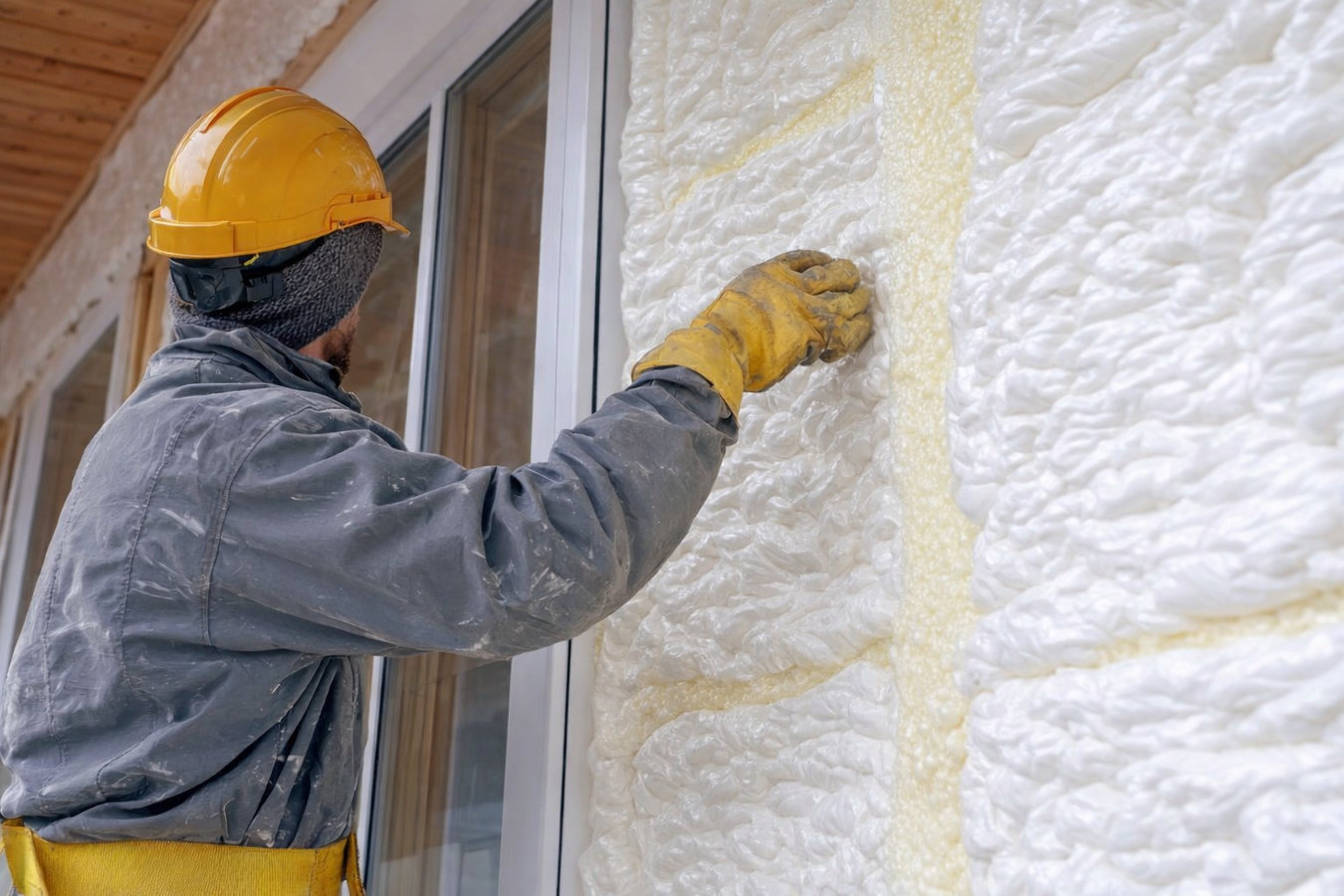
Every project starts with an on-site assessment. We walk your building, identify where heat is escaping, and give you a written proposal with the full scope of work before any commitment. For properties that need a high-performance thermal and air barrier in a single pass, spray foam insulation is often the most efficient path, particularly on roof decks and in wall cavities with irregular framing.
Best for buildings with irregular cavities, mechanical penetrations, or areas where air sealing and insulation need to be addressed at the same time.
Suited to commercial roof decks and exterior wall systems where continuous insulation is required to meet New York's commercial energy code.
Ideal for filling existing wall cavities in older commercial buildings where walls cannot be opened without major disruption to the space.
For buildings with multiple insulation challenges, a layered approach combining foam, board, and loose-fill often delivers the best performance at the most reasonable cost.
Queensbury sits at the edge of the Adirondack foothills in Warren County, where average January lows drop into the single digits Fahrenheit. That kind of sustained cold puts enormous pressure on any building's heating system - and under-insulated commercial spaces can see heating bills that are far higher than they should be. Much of Queensbury's commercial corridor along Route 9 and Aviation Road developed rapidly in the 1970s through 1990s, meaning a large share of commercial buildings were built to the energy standards of that era, which were far less demanding than today's. Business owners in Granville, NY and throughout the region face the same reality with older commercial stock that has never had a meaningful insulation upgrade.
New York enforces one of the more rigorous commercial energy codes in the country, and it applies to renovation and retrofit work - not just new construction. This means that if you are upgrading insulation as part of a larger project, the work has to meet current state standards. A contractor who is not current on those requirements can create compliance problems that cost you money down the road. Many commercial property owners in communities like Hudson Falls, NY have found that proactively meeting the code standard - rather than waiting for an inspection issue - also makes the building more attractive to future buyers or tenants. Heavy snow loads in this region also affect roof insulation choices directly, since ice dams and freeze-thaw cycles put real stress on roof systems that lack adequate insulation at the deck level.
For commercial energy standards in New York, see the New York State Department of State - Building Codes. For insulation best practices across commercial building types, see the North American Insulation Manufacturers Association (NAIMA).
Reach out by phone or online form and we follow up within one business day. We will ask about your building's size, age, and what problems you have noticed - high bills, cold zones, ice dams - so we arrive prepared rather than starting from scratch.
We walk the building with you and look at the areas most likely to be losing heat - roof deck, exterior walls, and mechanical penetrations. You will come away with a clear picture of what needs to be done and why, without any pressure to commit.
You receive a written proposal covering scope, materials, and total cost. If a building permit is required - which it often is for commercial work in New York - we handle pulling that permit before work begins. This step protects you legally and ensures the work is inspected.
The crew works systematically through the building, section by section. Once the work is complete, we walk you through everything that was done, hand over documentation of materials used and any permit inspections, and leave the space in the same condition we found it.
Free on-site estimate, no obligation. We reply within one business day.
(518) 645-9154Commercial insulation work in New York often requires a building permit, and missing that step can create costly corrections or problems when you sell or refinance. We handle the Town of Queensbury permit process on your behalf so you are not chasing paperwork while trying to run your business.
New York enforces rigorous commercial energy standards that apply to retrofit work, not just new construction. We design jobs to meet those requirements so you are not caught off guard by a code issue - and so the work stands up if your building is ever inspected, sold, or refinanced.
We have worked on commercial buildings throughout the Queensbury area, including older properties along the Route 9 and Aviation Road corridors. Ask us for references from local commercial projects - we are glad to provide them.
You receive a clear record of the materials used, areas covered, and any permit inspection results after every project. That paperwork is useful for insurance purposes, future energy audits, and if you ever sell or refinance. See standards from{" "}energystar.gov for commercial buildings.
Commercial insulation is a straightforward investment when the work is done right and the paperwork follows. We want every Queensbury building owner who calls us to feel confident in what was installed and to have the documentation to prove it long after we are gone.
Below-grade moisture control for commercial and residential buildings, protecting foundations and floor systems from vapor-driven damage.
Learn MoreSpray foam applied to commercial roof decks, walls, and mechanical areas for high-performance air sealing and thermal control in a single application.
Learn MoreQueensbury winters do not wait - schedule your on-site estimate now before the cold season hits and your heating bills climb again.