
Loading...
Serving Queensbury, NY and surrounding areas. (518) 645-9154
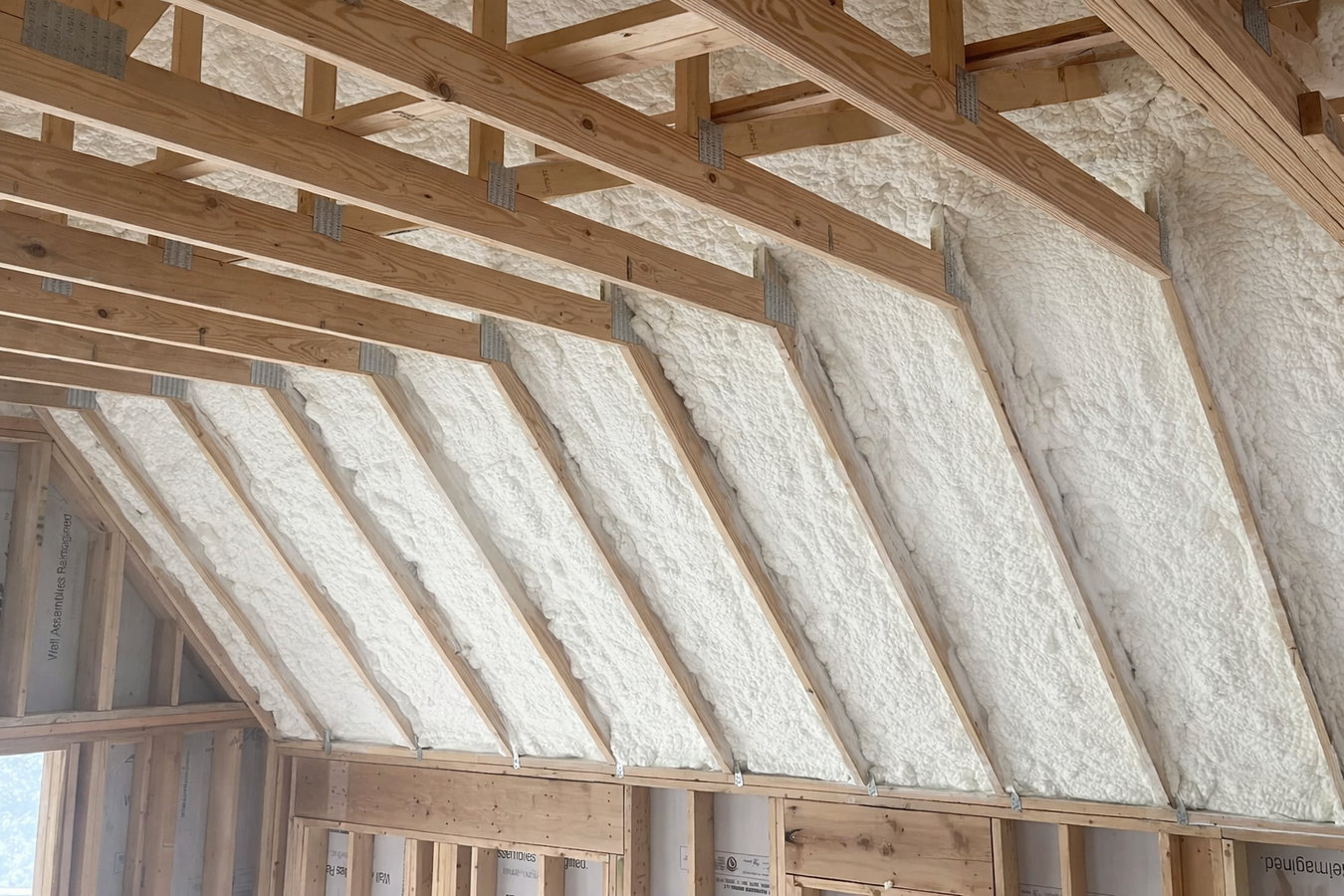
Closed-cell foam delivers more insulating power per inch than any common material and acts as a moisture barrier at the same time - built for the cold, wet winters Queensbury homeowners deal with every year.
Closed-cell foam insulation in Queensbury is a spray-applied material that expands, hardens, and creates a rigid layer that seals air leaks and resists moisture - most residential jobs covering a single area like a basement or attic are finished in one day.
Unlike fiberglass batts or blown-in insulation, closed-cell foam delivers roughly twice the insulating value in the same thickness of wall or ceiling. In an older Queensbury home - where walls may be thin and every inch of insulating space counts - that density matters. It also creates a moisture barrier, which is one of the main reasons homeowners here choose it for basements, crawl spaces, and rim joists. The Spray Polyurethane Foam Alliance provides homeowner resources on what to expect from a properly installed job.
If you are deciding between closed-cell and open-cell foam, the choice often comes down to where the insulation is going and whether moisture resistance is a priority. We offer both, and we also offer spray foam insulation as a broader service that covers both types for different areas of the home.
If your oil, gas, or electric bills have crept up over the past few winters without any obvious reason, your insulation may be losing its effectiveness. In Queensbury's long heating season, even a modest improvement in insulation can translate to hundreds of dollars in annual savings - a rising bill is worth investigating before another winter passes.
If one bedroom, a finished basement, or a room above the garage is always colder than the rest of the house in January, the insulation in that area is not doing its job. Queensbury's single-digit winter temperatures make these cold spots hard to ignore, and they usually point to a specific gap or thin area that closed-cell foam can fix permanently.
Hold your hand near an electrical outlet on an exterior wall on a cold day. If you feel a draft, air is moving through your walls - and wherever air moves, heat follows. This is especially common in older Queensbury homes where the framing was never properly sealed during construction.
Queensbury's spring snowmelt and summer humidity can push moisture into basements and crawl spaces that are not properly sealed. If you see water stains on your foundation walls or smell that damp, musty odor in March or April, your current insulation is not protecting that space - and closed-cell foam can stop the cycle.
Closed-cell foam is not one-size-fits-all, but it is well-suited to several specific problem areas that show up repeatedly in Queensbury homes. Rim joists - the framing at the very top of your foundation wall - are one of the most overlooked sources of heat loss in older homes, and closed-cell foam is the most effective material for sealing them. Basements and crawl spaces benefit from both the insulating value and the moisture resistance. Attic applications work especially well when you want to convert the attic into conditioned space or close off ice dam entry points.
For homeowners deciding between closed-cell and open-cell foam insulation, we walk through the pros and cons of each before any work begins. Open-cell foam is less expensive and better suited for interior wall cavities and sound attenuation. Closed-cell is the right call when moisture resistance, structural stiffness, or maximum R-value per inch is a priority. Both are delivered as part of our broader spray foam insulation service. The U.S. Department of Energy outlines the difference between insulation types at energy.gov/energysaver/insulation.
Best for homeowners dealing with heat loss and moisture in the lowest level of the home - the most common application in Queensbury's older housing stock.
Ideal for crawl spaces that see seasonal moisture or groundwater movement, where fiberglass batts would absorb water and lose their effectiveness.
The right choice when converting attic space to conditioned use, or when ice dams have caused repeated water intrusion along the eaves.
Suited for walls with thin cavities where maximum R-value per inch is needed and moisture resistance matters more than cost-per-square-foot.
Queensbury's heating season runs from October through April, with average January lows that regularly fall into the single digits. That extended cold means insulation has to work hard for many months, and any gap or thin spot shows up as a cold room or a heating bill that never seems to come down. Many homes in the area were built before modern energy codes, with uninsulated rim joists, thin attic insulation, and walls that were never insulated at all. Closed-cell foam delivers the most insulating value per inch of any common material, which makes it especially effective when wall cavities are shallow or space is limited.
Queensbury is also close to Lake George, and the combination of lake-effect humidity in summer and heavy snowmelt in spring creates moisture conditions that can quietly damage fiberglass insulation over time. Closed-cell foam resists moisture entirely, which makes it a smarter long-term choice for homes in this part of Warren County. We serve homeowners across the region, including Lake George and Warrensburg. NYSERDA rebates may apply to qualifying projects - check current program availability at nyserda.ny.gov.
We reply within one business day. We ask basic questions about what area of the home you want insulated, whether the space is finished, and whether you have noticed specific problems. This helps us come prepared and give you a realistic sense of the project before we arrive.
We measure the area, check what is already there, and flag any issues - like moisture or damaged framing - that need to be addressed first. You receive a written estimate that breaks down cost by area so you know exactly what you are paying for.
Before the crew arrives, clear the work area. You will also need to plan to be out of the house - with pets - during installation and for a period afterward while the foam cures and the space ventilates. We give you a specific re-entry time before work begins.
Most jobs covering a single area are done in one day. The foam expands and hardens within seconds of application, so the work moves quickly. Before we leave, we walk you through the finished work so you can see the coverage and confirm there are no gaps.
Free estimate. No obligation. We reply within one business day.
(518) 645-9154We tell you whether closed-cell foam is actually the right choice for your specific situation before we price anything. If open-cell or another material is a better fit, we say so. You get a straight answer, not a pitch for the most expensive option.
We have worked on homes throughout Queensbury and the surrounding area and understand firsthand what the Adirondack foothills winters do to older insulation. That local knowledge shapes every recommendation and every material choice we make.
Proper spray foam application is as much technique as material - undertrained installers leave voids that defeat the purpose entirely. We follow Spray Polyurethane Foam Alliance standards for application and quality - details at sprayfoam.org.
Closed-cell foam has a finished look you can inspect. We walk you through the installed product and point out what was covered, what thickness was achieved, and what to look for. A good job looks right - and we want you to see that before we drive away.
Closed-cell foam is a long-term investment - once it cures, there is nothing to replace or maintain. The homeowners who get the most from it are the ones who paired the right material with the right application, in the right locations. We make sure all three line up before we start.
A lower-cost spray foam option better suited to interior wall cavities and spaces where moisture resistance is less of a priority.
Learn MoreOur full spray foam service covers both closed-cell and open-cell applications across every area of the home.
Learn MoreSpots fill up before heating season - call us or request a free estimate online and we will get back to you within one business day.