Loading...
Serving Queensbury, NY and surrounding areas. (518) 645-9154
Cold floors, drafts from below, and heating bills that never come down are signs your basement is uninsulated. We fix that - with the right material, done right the first time.
Basement insulation in Queensbury stops heat from escaping through your foundation walls and first-floor ceiling, most jobs take one to two days and are complete before the next heating season begins.
If your floors feel cold in January no matter how high the thermostat is set, heat is moving downward through an uninsulated basement. That is one of the most common comfort complaints we hear from Queensbury homeowners - and one of the most straightforward problems to fix. Basement insulation puts a thermal barrier between your living space and the cold ground below.
Many homes in this area were built before modern energy standards, so there is little or nothing in those walls. Pairing basement insulation with crawl space insulation gives you complete coverage of every below-grade space, which is especially important in Queensbury's long heating season.
If your furnace runs almost constantly during Queensbury's coldest months but rooms above the basement still feel drafty or cold underfoot, heat is escaping through an uninsulated foundation. You should not have to crank the thermostat just to stay comfortable - that is your home telling you something is missing.
Queensbury regularly sees temperatures that freeze pipes in unprotected spaces. If you wrapped pipes as a precaution last winter - or dealt with an actual freeze - that is a clear signal the basement needs a thermal barrier, not just pipe wrap. Insulation protects the whole space, not just individual lines.
Spring snowmelt in the Adirondack foothills can push moisture into basements. If you see white mineral deposits on the walls, feel dampness, or notice a musty odor that worsens in March or April, the basement needs attention. Moisture must be addressed before insulation goes in - a good contractor checks this first.
Walking across your kitchen or living room floor in socks during January should not feel like walking on cold tile. If it does, heat is escaping downward through an uninsulated basement ceiling. This is one of the most common complaints local homeowners describe, and it is one of the most direct problems basement insulation solves.
We install both basement wall insulation and basement ceiling insulation, and we help you choose the right approach based on how you use your space. Wall insulation keeps the entire basement warmer - better for pipes, storage, and any finished or semi-finished area. Ceiling insulation (the underside of your first floor) is a simpler option when the basement itself does not need to stay warm. For spaces where moisture is a concern, closed-cell foam insulation is often the best choice because it resists moisture and seals air leaks at the same time.
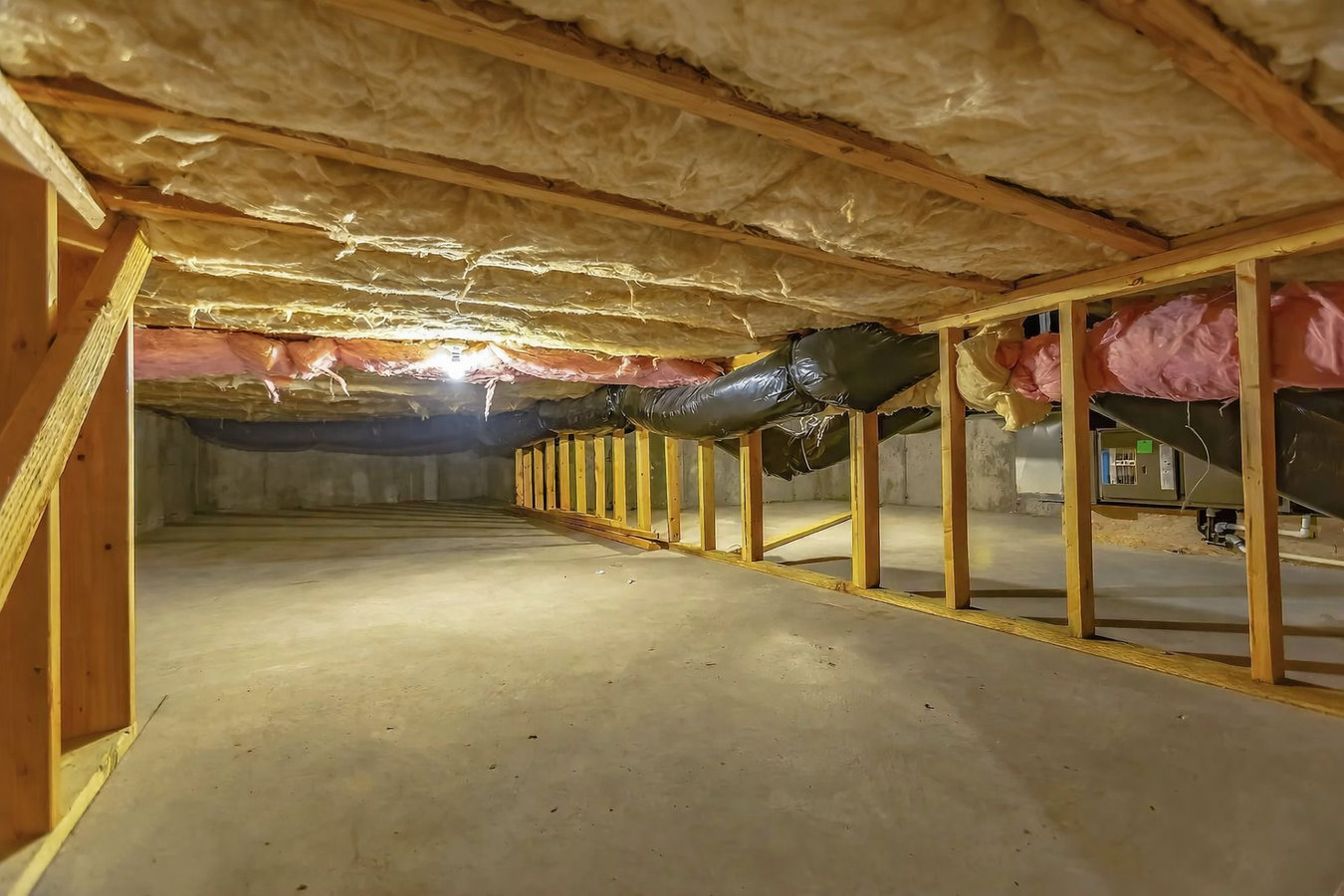
We also check rim joists - the framing at the very top of your foundation wall - which are one of the most common and overlooked sources of heat loss in Queensbury homes. If your basement connects to a crawl space, we can extend the work to cover that area too. Our team handles crawl space insulation as a separate service or as part of a combined project. Before any insulation goes in, we assess the space for moisture and tell you exactly what we find - no surprises after the job is done.
Best for homeowners who use the basement for storage, laundry, or living space, or who want to protect pipes through Queensbury's coldest nights.
A simpler, lower-cost option when the basement itself can stay cold and the goal is simply to keep the first floor warmer.
Targets one of the most common heat-loss points in older Queensbury homes, where the foundation meets the first-floor framing.
Ideal for basements with moisture concerns or irregular surfaces, combining insulation and air sealing in a single application.
Queensbury sits in Warren County in the Adirondack foothills, where average January lows regularly drop into the single digits. That kind of cold puts real pressure on an uninsulated basement - your heating system works overtime, and pipes in unprotected spaces are genuinely at risk. Many homes in Queensbury and the surrounding Glens Falls area were built in the mid-20th century, when basement insulation was minimal or nonexistent by today's standards. If your home was built before the 1980s, there is a good chance you are starting from scratch rather than upgrading. New York State also offers NYSERDA rebates for qualifying insulation work, which can meaningfully reduce the out-of-pocket cost for Warren County homeowners. Learn more at nyserda.ny.gov.
The moisture picture here also matters. Queensbury is close to the Lake George corridor and the upper Hudson River, and many neighborhoods see seasonal groundwater movement and spring snowmelt that can push moisture into basements. We serve homeowners across the area, including Glens Falls and Moreau. Every job starts with a moisture check - if water is getting in, we tell you before we touch a single piece of insulation.
We reply within one business day. We ask a few basic questions - basement size, finished or unfinished, any moisture history - so we come prepared. This first call is low-pressure; you are not committing to anything.
We walk through your basement with you, check for moisture or existing insulation, and measure the space. This visit usually takes 30 to 60 minutes and ends with a clear explanation of what we found and why it matters.
You receive a written estimate that breaks down scope, materials, and total cost. If you are applying for a NYSERDA rebate, we walk you through what may be available. Take your time - we will not push you to sign.
Most jobs are finished in one day. We clean up before we leave and walk you through the finished work together. If spray foam was used, we give you a clear re-entry time before we arrive so you can plan your day.
Free estimate. No obligation. We reply within one business day.
(518) 645-9154We assess your basement for water issues before we recommend any material or pick up a tool. If moisture is getting in, we tell you plainly - so you make your decision with the full picture, not find out afterward.
We have worked on homes throughout the Queensbury and Glens Falls area and understand what Adirondack winters do to an under-insulated basement. That local knowledge shapes every recommendation we make.
New York State offers rebates for qualifying insulation projects, and we help eligible homeowners navigate the process. The U.S. Department of Energy also outlines energy savings at energy.gov - we are happy to walk you through both.
We leave the space as clean as we found it and walk you through the finished installation before we pack up. If anything looks off to you, say so on the spot - that is the easiest time to address it.
Basement insulation done right is straightforward work - but it has to be paired with an honest moisture assessment and the correct material choice for your space. That combination is what makes the difference between a job that performs for decades and one that creates problems within a few years.
The highest R-value per inch of any common material - and a built-in moisture barrier that is ideal for Queensbury basements and rim joists.
Learn MoreExtend the thermal envelope below your home by insulating any crawl space connected to or adjacent to your basement.
Learn MoreQueensbury's heating season is long - every month without insulation is money out the door. Call us or request a free estimate online and we will get back to you within one business day.